
Quick Answer: Are Settlements Taxable?
The Short Answer
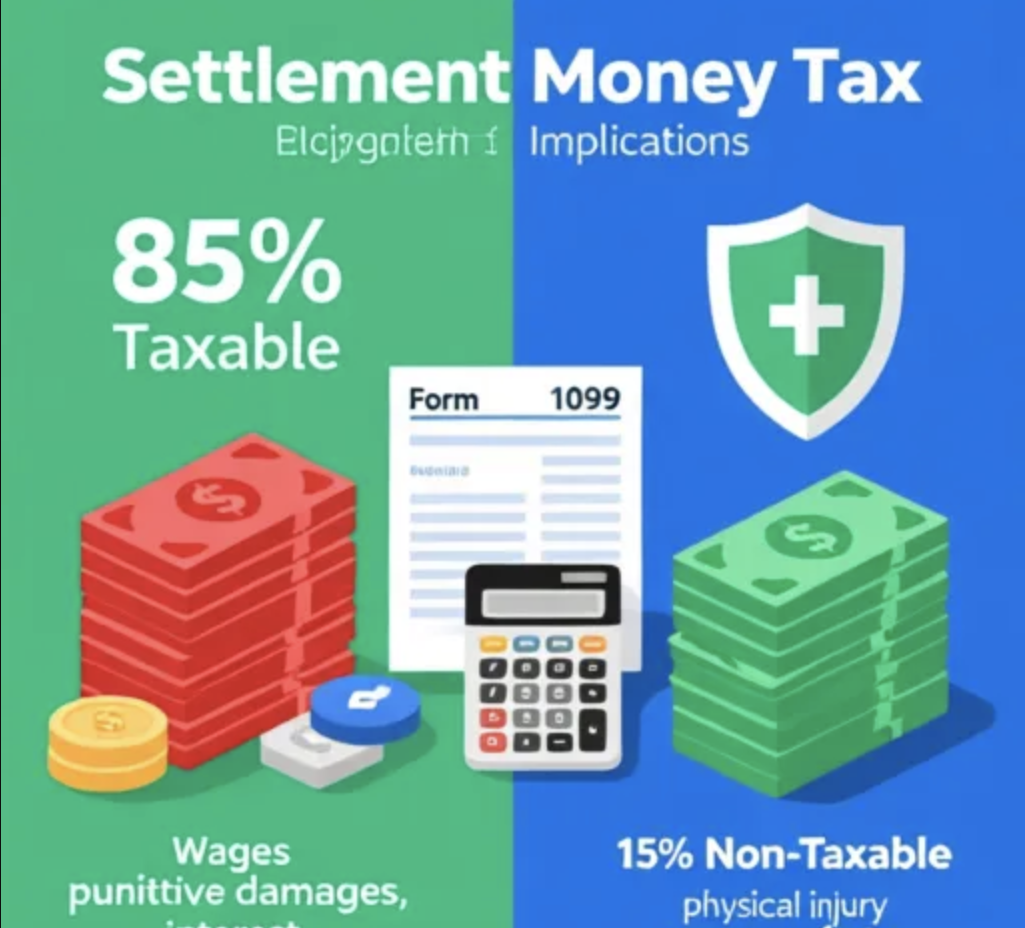
Most class action settlement money is taxable - approximately 85% of settlement payments are considered taxable income by the IRS. Only specific types of compensation, primarily physical injury settlements, may be exempt from taxation.
Key Rule: Under IRS Internal Revenue Code Section 61, all income is taxable unless specifically excluded by law.
Taxable vs. Non-Taxable Settlement Money
Generally Taxable
- Lost Wages & Back Pay
Taxed as ordinary income at your regular tax rate
- Punitive Damages
Always taxable, regardless of settlement type
- Interest on Settlements
Reported as interest income on Form 1040
- Employment-Related Claims
Severance pay, front pay, discrimination damages
- Business Loss Compensation
Lost profits and business interruption
Potentially Non-Taxable
- Physical Injury Compensation
Personal physical injuries or sickness (IRC Section 104)
- Medical Expense Reimbursement
Only if you didn't previously deduct these expenses
- Property Damage Compensation
Only to the extent it doesn't exceed your basis
- Emotional Distress
Only if directly related to physical injury
How Settlement Taxes Actually Work
Settlement Distribution
When you receive your settlement payment, the settlement administrator may issue a Form 1099-MISC for amounts over $600, reporting it to both you and the IRS.
IRS Reporting Requirements
The IRS requires reporting of settlement payments as miscellaneous income on Schedule 1 of Form 1040, unless specifically excluded under tax law.
Tax Rate Application
Taxable settlement amounts are added to your ordinary income and taxed at your regular marginal tax rate, which can range from 10% to 37% for 2026.
State Taxes
Most states follow federal guidelines for taxing settlements, though some have different rules for specific types of compensation.
Common Settlement Types & Tax Treatment
Employment Discrimination
Personal Injury
Consumer Protection
Data Privacy Breach
Tax Planning Strategies for Settlement Recipients
Legal Ways to Minimize Your Tax Burden
Documentation Strategy
- • Keep detailed records of medical expenses
- • Document lost wages with precise calculations
- • Separate taxable and non-taxable components
- • Request detailed breakdown from settlement administrator
Timing Considerations
- • Consider settlement timing relative to tax year
- • Plan for estimated tax payments
- • Understand quarterly payment requirements
- • Evaluate impact on other tax deductions/credits
How to Report Settlement Income
Form 1099-MISC
Settlement administrators typically issue Form 1099-MISC for payments over $600. You'll receive this form by January 31st of the year following your settlement.
Important: Even if you don't receive a 1099 form, you're still required to report the income if it's taxable.
Where to Report on Tax Return
- • Form 1040, Schedule 1: Line 8z for "Other income"
- • Non-taxable portions: May require statement attachment explaining exclusion
- • State returns: Follow federal guidelines unless state specifies differently
Common Tax Mistakes to Avoid
Don't Make These Mistakes
Ignoring 1099 forms - The IRS receives a copy and will flag discrepancies
Not making estimated payments - May result in underpayment penalties
Wrongly claiming all as non-taxable - Physical injury exception is very specific
Forgetting state taxes - Most states tax settlements like federal returns
Smart Practices to Follow
Consult tax professional - Especially for complex settlements over $10,000
Keep detailed records - Documentation for all settlement-related expenses
Request breakdown - Get settlement administrator to separate taxable/non-taxable portions
Plan for taxes - Set aside 25-30% of taxable portion for taxes
Frequently Asked Questions
Will I receive a 1099 form for my settlement?
Yes, if your settlement is $600 or more, the settlement administrator should issue Form 1099-MISC reporting the payment to both you and the IRS. Even for smaller amounts, you're still required to report taxable income.
Are emotional distress damages ever tax-free?
Only if the emotional distress is directly related to a physical injury or sickness. Standalone emotional distress claims in employment or consumer protection cases are typically taxable.
What if I disagree with the 1099 amount?
Contact the settlement administrator to correct the error. If unresolved, you can report the correct amount and attach an explanation to your tax return.
Do I need to pay estimated taxes on settlement money?
Yes, if you expect to owe $1,000 or more in tax and don't have enough withholding from other sources. Calculate 25-30% of your taxable settlement amount for estimated payments.
How do I handle a settlement that mixes taxable and non-taxable portions?
Request a detailed breakdown from the settlement administrator. Report only the taxable portion on your tax return and attach a statement explaining the non-taxable exclusion.
Maximize Your Net Settlement Recovery
Understanding taxes helps you plan better and avoid costly mistakes. Let Reclaimr help you find and claim settlements with confidence.
Reclaimr helps you discover settlements and understand what you're entitled to.
Start Finding Claims