
Settlement Claim Appeals Process 2026: How to Fight a Denied Claim and Win
Your settlement claim was denied. Don't give up—thousands of denied claims get approved on appeal every year. Learn the complete appeals process for 2026, how to challenge denied class action and data breach settlement claims, common rejection reasons, and step-by-step strategies to get your claim approved.
March 8, 2026
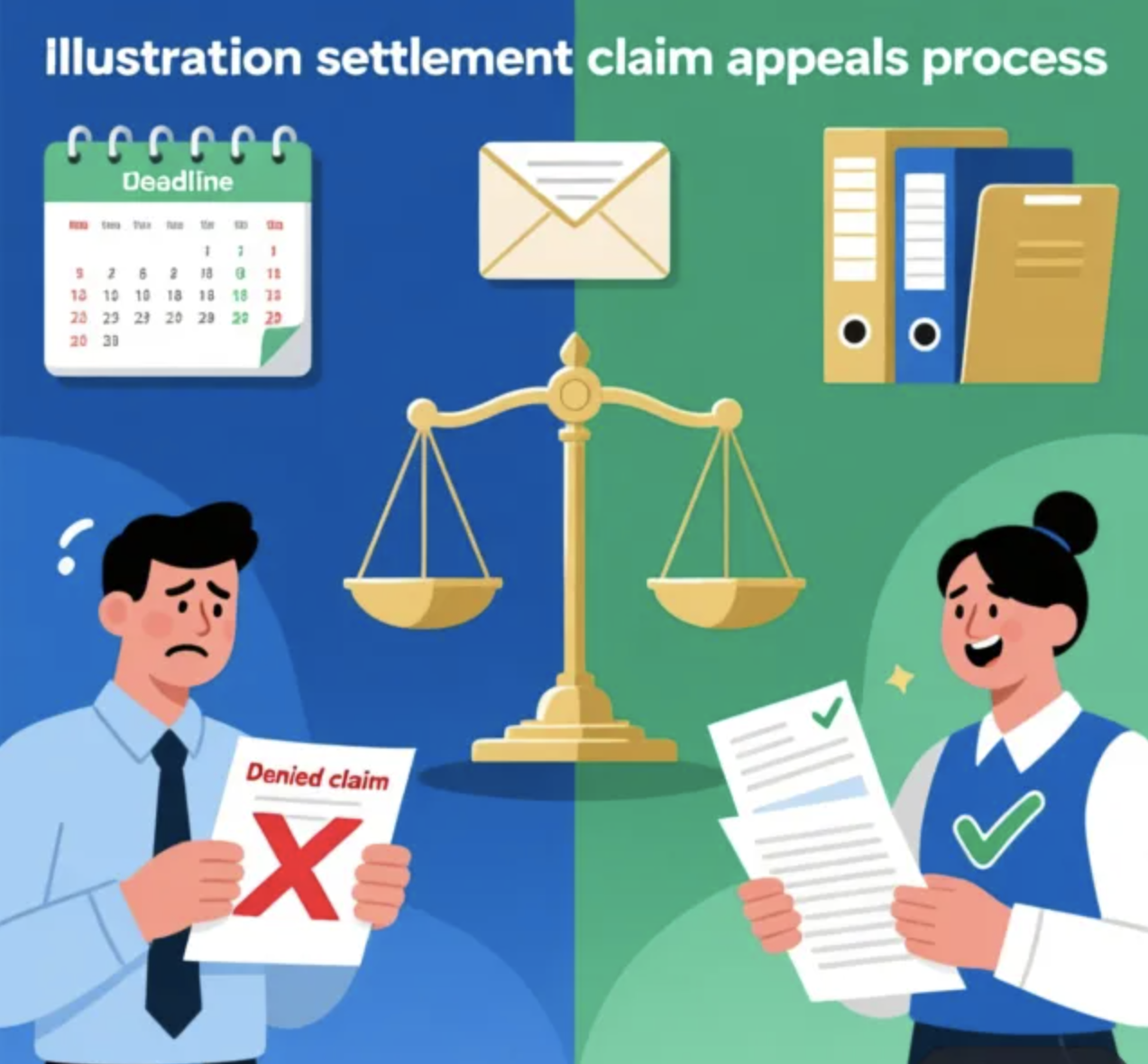
You spent hours researching the settlement, gathering documentation, and carefully completing your claim form. Weeks later, you received the dreaded email: "Your claim has been denied."
It's frustrating—and surprisingly common. 20-30% of settlement claims are initially denied, often for minor technical errors or missing information. The good news? Most settlements offer an appeals process, and claimants who appeal have a significantly higher approval rate than first-time filers.
This guide walks you through exactly how to appeal a denied settlement claim in 2026. Whether it's a data breach settlement, employment wage claim, or consumer class action, we'll show you how to identify why your claim was rejected, gather the right documentation, submit a winning appeal, and get the compensation you deserve.
Why Settlement Claims Get Denied: Understanding the Rejection
Before appealing, you need to understand WHY your claim was denied. Settlement administrators provide specific rejection reasons—reading them carefully is your first step toward a successful appeal.
1. Incomplete or Missing Documentation
The most common reason for denial. You didn't provide sufficient proof of your claim.
Examples:
- No proof of employment (pay stubs, W-2s, tax returns)
- No documentation of financial losses from data breach
- No evidence of account ownership during breach period
- Missing identity verification documents
- Blurry or unreadable uploaded documents
Appeal strategy: Submit ALL required documentation. If you lack certain records, submit a detailed affidavit explaining why and providing alternative evidence.
2. Eligibility Issues
Administrator determined you don't meet the settlement's class definition.
Common examples:
- Employment dates don't match violation period
- Resided in wrong state/region
- Account opened after breach occurred
- Didn't purchase the affected product/service
- Job classification doesn't match covered positions
Appeal strategy: Prove you DO meet eligibility by providing additional documentation (old pay stubs, account statements, receipts) or explaining discrepancies in dates/locations.
3. Missed Filing Deadline
You submitted your claim after the deadline (or administrator believes you did).
Common scenarios:
- Submitted claim at 11:59 PM on deadline day (server timezone issue)
- Mailed claim but postmark was after deadline
- Technical error on settlement website prevented submission
- Confusion about deadline date (different time zones)
Appeal strategy: Provide proof of timely submission (confirmation email with timestamp, screenshot of submission, certified mail receipt). If technical error, document the issue thoroughly.
4. Insufficient Proof of Damages
You claimed compensation but didn't adequately prove your losses.
Common issues:
- Claimed fraudulent charges but provided no bank statements
- Requested time compensation but submitted no activity log
- Claimed out-of-pocket expenses with no receipts
- Vague descriptions like "I spent hours dealing with this"
Appeal strategy: Submit specific, documented evidence. Create detailed logs with dates, times, activities. Highlight relevant entries on bank statements. Submit affidavits explaining damages.
5. Duplicate Claims
You (or someone on your behalf) filed multiple claims for the same settlement.
How this happens:
- Submitted claim online AND by mail
- Spouse filed separate claim for same household
- Hired a claims service that also filed on your behalf
- Accidentally submitted twice due to website error
Appeal strategy: Explain duplicate submission was unintentional. Request withdrawal of duplicate claim and processing of the complete claim. If claims service filed without permission, document this.
Appeal Options Available to You
Most settlements offer multiple ways to challenge a denial. Understanding your options is crucial to choosing the right strategy.
Option 1: Reconsideration Request (Administrative Appeal)
Most common. Request that the settlement administrator review your claim again, typically with additional documentation.
Key features:
- Who reviews: Settlement administrator (same company that denied you)
- Timeline: Usually 30-60 days for decision
- Success rate: 40-60% when additional documentation provided
- Cost: Free
- Best for: Missing documentation, technical errors, clarification requests
How to submit: Follow instructions in your denial notice. Typically involves submitting a "Request for Reconsideration" form or sending a letter explaining why your claim should be approved, with supporting documents.
Option 2: Formal Objection to Settlement
More serious. Object to the settlement itself in court, arguing it's unfair or your exclusion is improper.
Key features:
- Who reviews: Judge overseeing the settlement
- Timeline: Usually 30-90 days before final approval hearing
- Success rate: 10-20% (courts rarely overturn settlements)
- Cost: Free (self-represented) or $2,000-$10,000+ (attorney)
- Best for: Fundamental unfairness, improper exclusion from settlement class
How to submit: File a formal objection with the court, typically by mailing a written objection to the court and all parties. May require appearing at the fairness hearing.
Option 3: Opt-Out and Individual Lawsuit
Nuclear option. If you previously opted out of the class action (or still can), sue the company individually for your damages.
Key features:
- Who reviews: Court (new lawsuit)
- Timeline: 1-3 years to resolution
- Success rate: Varies wildly based on case merits
- Cost: $5,000-$50,000+ in attorney fees (contingency available)
- Best for: Large damages (over $25,000), strong evidence, attorney representation
Warning: Usually only available BEFORE settlement final approval. If you didn't opt out earlier, this option is likely unavailable. Check denial notice carefully.
Option 4: Regulatory Agency Complaint
Leverage regulators. File a complaint with the FTC, state Attorney General, or relevant regulatory agency if settlement administrator is acting improperly.
Key features:
- Who reviews: Government regulatory agency
- Timeline: 30-180 days for investigation
- Success rate: Varies; best for systemic problems, not individual claims
- Cost: Free
- Best for: Settlement administrator misconduct, pattern of wrongful denials
How to submit: File complaint with FTC (ftc.gov/complaint), state AG, or relevant agency (e.g., EEOC for employment settlements). Document pattern of unfair practices.
Step-by-Step Appeal Process
Follow this proven process to submit a winning appeal. Most successful appeals follow this structure.
1Carefully Review Your Denial Notice
Your denial letter/email contains critical information:
- Specific reason for denial (this is your target!)
- Appeal deadline (typically 30-60 days from denial—miss this and you lose appeal rights)
- Appeal submission instructions (online form, mailing address, email)
- Required documentation for appeal
- Claim ID number (reference in all correspondence)
Critical: If denial notice doesn't explain WHY you were denied, contact settlement administrator immediately and request written explanation. You can't appeal effectively without knowing the reason.
2Gather Additional Documentation
Address the denial reason directly with new or better evidence:
By denial type:
- Missing employment proof: Old W-2s, tax returns, pay stubs, offer letters, Social Security earnings record
- No proof of account: Account statements, welcome emails, screenshots, bills with your name
- Insufficient loss documentation: Bank statements highlighting fraudulent charges, time log with specific dates/times, receipts for out-of-pocket expenses
- Eligibility dispute: Documentation showing correct dates of employment/residency/product purchase
- Missed deadline: Email confirmation with timestamp, certified mail receipt, website error screenshots
Organize clearly: Create a document index (e.g., "Exhibit A: W-2 Form 2023"). Highlight relevant information with digital highlighting or sticky notes on scanned documents.
3Write a Compelling Appeal Letter
Your appeal letter is your opportunity to tell your story and explain why the denial was wrong. Structure it like this:
Appeal Letter Template:
RE: Request for Reconsideration – Claim ID: [Your Claim ID]
Dear Settlement Administrator,
I am writing to request reconsideration of my denied claim for [Settlement Name]. I received your denial notice dated [Date] stating my claim was denied because [quote specific denial reason].
I believe this denial was made in error. I am submitting additional documentation that proves [explain why denial was incorrect].
[Attach detailed explanation addressing each denial reason]
Enclosed please find the following additional documentation:
1. [Document 1 description]
2. [Document 2 description]
3. [Document 3 description]
I respectfully request that you review this additional information and approve my claim. I can be reached at [phone] or [email] if you need any clarification.
Thank you for your time and consideration.
Sincerely,
[Your Full Name]
[Claim ID]
[Contact Information]
Tips: Be polite but firm. Stick to facts. Avoid emotional language. Reference specific settlement rules if applicable (e.g., "Section 4.2 of the settlement agreement states...").
4Submit Your Appeal Before Deadline
Submit well before deadline—don't wait until the last day.
- Online submission: Follow link in denial notice to appeal portal. Upload appeal letter and all documents as PDFs.
- Email submission: Send to appeal email address with subject line "Appeal - Claim ID [Your ID]"
- Mail submission: Send certified mail with return receipt to prove timely delivery. Address on denial notice.
- Fax submission: If offered, send with cover sheet including Claim ID
Critical: Keep proof of submission (confirmation email, certified mail receipt, fax transmission report). If administrator claims you missed deadline, you'll need evidence you submitted on time.
5Follow Up and Track Your Appeal
After submitting, monitor your appeal status:
- Check online portal: Log into settlement website weekly to check appeal status
- Save all correspondence: Emails, letters, notes from phone calls
- Follow up if no response: If you haven't heard within the stated timeline, contact administrator
- Respond quickly to requests: If administrator asks for more info, submit immediately (tight deadlines)
Typical appeal timeline: 30-90 days for decision. Large settlements may take longer due to appeal volume.
Strengthening Your Appeal: Proven Strategies
These strategies significantly increase your chances of appeal approval. Use them based on your specific denial reason.
1. Affidavit Strategy
If you lack traditional documentation, submit a sworn affidavit (written statement under oath).
Best for: Missing records, destroyed documents, undocumented time spent. Courts and administrators accept affidavits as evidence when records unavailable through no fault of your own.
2. Alternative Documentation
When primary documents unavailable, submit alternative evidence.
Examples: Bank statements instead of pay stubs; Social Security earnings record instead of W-2; email receipts instead of paper receipts; testimony from coworkers/family members.
3. Pattern Evidence
Show that administrator's denial is inconsistent with settlement terms or similar claims.
Example: "My colleague filed identical claim with same documentation and was approved. Here're their claim details (with permission)."
4. Attorney Review Letter
Have an attorney review your denial and appeal letter.
Impact: Appeals accompanied by attorney letters have higher approval rates. Administrators take legal correspondence more seriously. Many attorneys offer free claim reviews.
5. Regulatory Complaint
File simultaneous complaint with regulatory agency (FTC, state AG).
Leverage: Copy agency complaint to settlement administrator. Often motivates faster review. Best for systemic issues or clear misconduct.
6. Technical Error Documentation
If denial resulted from technical glitch, document thoroughly.
Submit: Screenshots of error messages, internet speed tests showing connectivity, timestamps of submission attempts, correspondence with website support.
Critical Appeal Deadlines
Missing appeal deadlines is fatal. You permanently lose your right to compensation. Mark your calendar immediately.
⚠️ Appeal Deadlines by Settlement Type
Most Class Action Settlements
Standard appeal window for most settlements
Data Breach Settlements
Often allow longer appeal period due to complexity
Objection Deadlines
If objecting to settlement in court (shorter deadline!)
Deadline Calculation Tips
- Count correctly: Deadline is "within X days" = business days usually. "By [date]" = that specific day.
- Time zones: Use settlement administrator's time zone (usually Eastern Time for large settlements)
- Mailed appeals: Postmark by deadline (use certified mail)
- Online appeals: Submit by 11:59 PM administrator's local time on deadline day
- Weekends/holidays: If deadline falls on weekend/holiday, usually extended to next business day (but don't rely on this—submit early!)
Tips for Appeal Success
These strategies dramatically increase approval rates. Learn from successful appeals.
DO: Submit Everything at Once
Don't submit appeal, then submit more documents later. Send complete appeal package with all documentation, organized and clearly labeled. Administrators won't wait for additional info—they'll decide based on what you submitted.
DO: Be Specific and Detailed
Instead of "I worked overtime without pay," write: "From March 2024-August 2024, my manager required me to work 50-60 hours per week. I was only paid for 40 hours. I kept a log showing 220 unpaid overtime hours during this period. See Exhibit A: Time Log."
DO: Reference Settlement Agreement
If settlement rules support your claim, quote them directly. "Section 5.3 of the settlement agreement states that 'proof of employment may include W-2 forms, tax returns, or affidavits.' I am submitting my 2023 tax return as proof."
DON'T: Be Emotional or Argumentative
Avoid angry language, threats, or emotional rants. Stick to facts. "This denial is unfair and I'm contacting my lawyer!" is less effective than "I believe this denial was made in error based on the documentation submitted."
DON'T: Wait Until Deadline Day
Submit appeal as soon as possible. If you wait until deadline day and encounter technical issues, website crashes, or mail delays, you'll miss deadline and lose appeal rights permanently.
DON'T: Ignore Denial Notice
Some claimants give up after denial. 40-60% of appeals are successful when claimants submit additional documentation. Don't let denial be final—appeal!
Frequently Asked Questions
What if I miss the appeal deadline?
You permanently lose your right to appeal. Settlement administrators have no discretion to extend deadlines (except in extremely rare circumstances like natural disasters preventing mail delivery).
Exception: If you can prove you submitted appeal on time but administrator lost it, you might have recourse. Keep proof of all submissions!
Can I submit multiple appeals?
Usually no. Most settlements only allow one appeal. Make it count by submitting comprehensive appeal with all documentation the first time.
Exception: If administrator requests additional information during appeal review, you can submit that. But you can't submit a second appeal after first appeal is denied.
Do I need a lawyer for appeals?
Not required, but can help. Most claimants appeal successfully without attorneys. However, lawyers can:
- Review denial and identify legal errors
- Draft stronger appeal letters
- Identify additional evidence you missed
- Represent you in court objections (if needed)
Many employment lawyers and consumer protection attorneys offer free claim reviews.
How long does appeal review take?
Typical timeline: 30-90 days from submission to decision.
Large settlements (thousands of appeals) may take 90-180 days. Small settlements may decide within 30 days. Check settlement website for expected timeline.
What if my appeal is also denied?
Options after appeal denial:
- Object to settlement in court: File formal objection before final approval hearing (if deadline hasn't passed)
- File regulatory complaint: FTC, state AG, or relevant agency
- Contact media: Consumer reporters sometimes cover unfair settlement practices
- Accept denial: Unfortunately, sometimes denial stands
Can I appeal a denial for "insufficient funds"?
No. If your claim is denied because the settlement fund is exhausted (all money distributed to other claimants), appeal typically won't help.
However, verify this is actually the reason—administrators sometimes wrongly claim insufficient funds when they actually denied for other reasons.
Discover Class Action Settlements You Qualify For
Don't miss out on compensation from class action settlements. Reclaimr helps you discover settlements you may qualify for, provides detailed claim information, and ensures you never miss important deadlines.
Reclaimr provides comprehensive information on class action settlements, including eligibility requirements, documentation needed, and step-by-step filing instructions.
View Settlement DetailsBottom Line
Receiving a settlement claim denial is discouraging—but it's not the end. Thousands of claimants successfully appeal denials every year and receive the compensation they deserve. The key is understanding why you were denied, gathering the right documentation, and submitting a compelling appeal before the deadline.
Act immediately. Appeal deadlines are short (typically 30-60 days) and strictly enforced. Don't wait until the last day—technical issues, mail delays, or website problems could cause you to miss deadline permanently. Submit your appeal as soon as possible.
Be thorough. Submit all documentation at once. Be specific and detailed in your appeal letter. Reference settlement agreement sections that support your claim. Consider having an attorney review your appeal before submitting.
And remember: most appeals succeed when claimants provide better documentation. If you were denied for missing or insufficient proof, this is your opportunity to strengthen your case. Don't let a denial make you give up on money you're rightfully owed. Appeal, provide evidence, and get paid.