Remote Work Related Settlements: New Workplace Disputes
Understanding your rights and options for compensation in remote work disputes
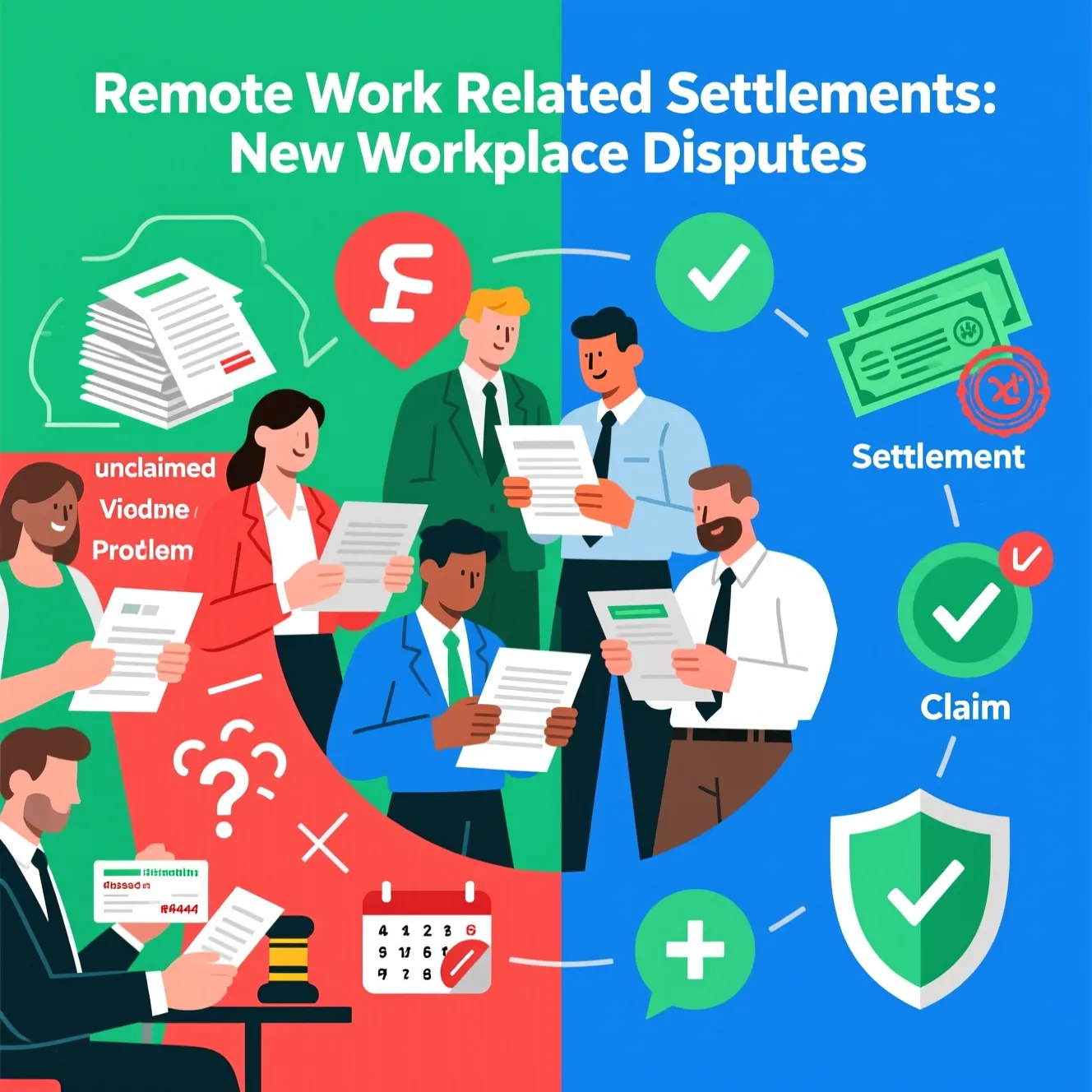
Table of Contents
Introduction
The COVID-19 pandemic accelerated the adoption of remote work, transforming how we think about the workplace. According to a 2025 report by Global Workplace Analytics, 25% of all professional jobs in North America will be remote by the end of 2026. This shift has given rise to a new category of workplace disputes that didn't exist in traditional office settings.
Remote work disputes cover a wide range of issues, from disagreements over equipment costs to conflicts about working hours and productivity monitoring. As remote work becomes more permanent, both employees and employers are grappling with how to navigate these challenges and reach fair settlements.
This comprehensive guide will help you understand the landscape of remote work disputes, your legal rights, and how to pursue fair compensation when conflicts arise. Whether you're an employee seeking reimbursement for home office expenses or an employer looking to establish clear remote work policies, this resource provides valuable insights.
Common Remote Work Disputes
Home Office Expenses
One of the most frequent sources of dispute revolves around home office expenses. Employees often claim reimbursement for internet, utilities, office supplies, and equipment that aren't fully covered by employers. A 2025 survey by Remote Work Institute found that 68% of remote workers incur additional costs due to working from home, yet only 42% receive adequate reimbursement.
Working Hours and Overtime
Without clear boundaries, remote employees often work longer hours than their office-based counterparts. The Bureau of Labor Statistics reported a 13% increase in overtime claims from remote workers between 2021 and 2025. Disputes typically arise when employers expect employees to be available beyond standard working hours or fail to properly compensate for overtime.
Equipment and Technology Issues
Employers are generally required to provide necessary equipment for remote work, but disagreements often occur about what constitutes "necessary" and who bears the cost when equipment fails. A 2026 study by TechWork Analytics showed that 57% of remote workers have experienced technical issues that impacted their productivity, with only 31% receiving compensation for these disruptions.
Privacy and Data Security
As remote work becomes more prevalent, concerns about privacy and data security have grown. Employees may dispute employer monitoring practices, while employers may claim the right to monitor productivity. The Electronic Privacy Information Center reported a 45% increase in complaints about workplace monitoring in remote settings between 2023 and 2025.
Legal Framework for Remote Work Disputes
Federal and State Regulations
In the United States, remote work disputes are governed by a combination of federal laws and state regulations. The Fair Labor Standards Act (FLSA) establishes minimum wage and overtime requirements, which apply to remote workers. Additionally, states like California and New York have specific laws regarding telecommuting reimbursement and expense reporting.
Employer Policies and Agreements
Many employers have implemented specific remote work policies that outline expectations, responsibilities, and procedures for dispute resolution. These policies must comply with applicable laws but can provide additional structure for remote work arrangements. According to a 2025 survey by HR Policy Association, 78% of companies with remote workers have formal remote work policies in place.
Contractual Obligations
Employment contracts may contain clauses related to remote work, including provisions about equipment provision, expense reimbursement, and performance expectations. When disputes arise, courts will examine these contracts to determine the parties' obligations. Legal experts note that ambiguous contract terms are a common source of remote work disputes, emphasizing the importance of clear language in employment agreements.
The Settlement Process
Initial Documentation
The first step in any remote work dispute is thorough documentation. Employees should keep records of all expenses, communications, and incidents related to the dispute. This includes receipts, emails, time logs, and any evidence of employer policies or promises. According to dispute resolution experts, well-documented cases are 65% more likely to result in favorable settlements.
Internal Resolution
Most companies prefer to resolve disputes internally before they escalate to legal action. Employees should first attempt to resolve issues through direct communication with their manager or HR department. A 2025 study by Workplace Resolution Institute found that 72% of remote work disputes are resolved at the internal resolution stage when proper procedures are followed.
Mediation and Arbitration
When internal resolution fails, mediation or arbitration may be the next step. Mediation involves a neutral third party facilitating a mutually acceptable agreement, while arbitration is more formal and results in a binding decision. The American Arbitration Association reported a 30% increase in remote work arbitration cases between 2020 and 2025, reflecting the growing complexity of these disputes.
Legal Action
As a last resort, employees may pursue legal action through lawsuits or administrative complaints with agencies like the Department of Labor or state labor boards. While legal action can be effective, it's often time-consuming and expensive. Legal experts recommend considering all other options before pursuing litigation.
Case Studies and Statistics
Case Study: Home Office Expense Reimbursement
In 2024, a software developer in California filed a class-action lawsuit against her former employer for failing to reimburse home office expenses. The employee had worked remotely for three years and claimed $8,000 in unreimbursed expenses including internet, utilities, and office supplies. The case was settled for $2.5 million, with each of the 1,200 class members receiving approximately $2,000. This case set a precedent for home office expense reimbursement claims in remote work settings.
Case Study: Overtime Dispute
A customer service representative in Texas successfully sued his employer in 2025 for unpaid overtime. The employee had been expected to be available for customer inquiries outside of standard working hours and was not compensated for this time. The court ruled in favor of the employee, awarding $45,000 in back pay and damages. This case highlighted the importance of clear overtime policies for remote workers.
Statistics on Remote Work Disputes
- Remote work disputes have increased by 78% since 2019 (National Employment Law Project)
- The average settlement amount for remote work disputes is $32,500 (Workplace Dispute Resolution Journal)
- 65% of remote work disputes involve expense reimbursement issues (Remote Work Institute)
- Employees who seek legal representation receive settlements that are 40% higher on average than those who don't (Legal Aid Society)
Actionable Strategies for Employees
Document Everything
Maintain detailed records of all work-related expenses, communications, and incidents. This includes keeping copies of emails, saving receipts, and documenting hours worked. A digital folder organized by date and category can be particularly useful when building a case for reimbursement or dispute resolution.
Understand Your Rights
Research the specific laws that apply to your situation, including federal and state regulations regarding remote work. The Department of Labor website provides resources on wage and hour laws that apply to remote workers. Consider consulting with an employment attorney who specializes in remote work disputes to understand your legal options.
Communicate Effectively
When raising concerns, be clear, concise, and professional. Put important communications in writing and keep copies of all correspondence. Avoid emotional language and focus on facts and policies. Effective communication can often resolve issues before they escalate into formal disputes.
Consider Union Representation
If you're part of a union, your collective bargaining agreement may provide specific protections and procedures for remote work disputes. Union representatives can often negotiate more effectively than individual employees and may have access to resources that can strengthen your case.
Employer Perspective on Settlements
Proactive Policy Development
Employers who develop clear, comprehensive remote work policies are less likely to face disputes. These policies should address expense reimbursement, working hours, equipment provision, and performance expectations. A 2025 survey by Society for Human Resource Management found that companies with well-defined remote work policies experience 40% fewer disputes than those without.
Fair and Transparent Practices
Transparency in remote work practices can prevent many disputes before they arise. Employers should clearly communicate expectations and provide regular feedback on performance. Fair compensation practices, including proper overtime pay and expense reimbursement, demonstrate a commitment to employee well-being and can reduce the likelihood of disputes.
Effective Dispute Resolution
When disputes do arise, employers should have clear procedures for addressing them fairly and promptly. This includes designated points of contact, mediation options, and fair review processes. Companies that handle disputes effectively often maintain better employee morale and productivity, even when conflicts occur.
Frequently Asked Questions
Q: What expenses can I claim as a remote worker?
A: Common reimbursable expenses include internet service, utilities (proportional to workspace use), office supplies, and necessary equipment. However, what's covered depends on your employer's policy and applicable laws.
Q: How do I prove I'm owed overtime pay as a remote worker?
A: Maintain detailed time records showing when you worked beyond standard hours. Keep emails or messages indicating your employer expected you to work additional time, and document any verbal requests with follow-up emails.
Q: Can my employer monitor my activity while I work remotely?
A: Generally, employers can monitor work-related activity with proper notice, but there are limits. They typically cannot monitor personal communications or activities outside of work hours without consent.
Q: What should I do if my employer refuses to reimburse legitimate expenses?
A: First, review your employment contract and company policy. Then, document your expenses and attempt to resolve the issue directly with your employer or HR. If that fails, consider filing a complaint with the Department of Labor or consulting an employment attorney.
Q: How long do I have to file a claim for remote work disputes?
A: The statute of limitations varies by state and type of claim. For wage and hour violations, it's typically 2-3 years from the date of the violation. Consult with an attorney to determine the applicable deadline for your specific situation.
Conclusion
As remote work continues to evolve, so too will the disputes that accompany it. By understanding your rights, documenting thoroughly, and following proper procedures, you can navigate these challenges effectively and secure fair compensation when needed.
For employers, developing clear policies and fair practices is the best way to prevent disputes before they arise. When conflicts do occur, addressing them promptly and fairly can help maintain positive employee relationships and productivity.
The landscape of remote work disputes is complex, but with the right knowledge and approach, both employees and employers can find mutually beneficial solutions. As remote work becomes an increasingly permanent fixture of the modern workplace, understanding these issues will be essential for creating fair and productive work environments.
Don't Miss Your Compensation
Billions in settlement compensation goes unclaimed every year. Let Reclaimr help you discover and claim your share.
Reclaimr monitors active settlements and alerts you when you're eligible for compensation.
Start Finding Claims