Can You Claim Settlement Money Without Receipts?
The Short Answer
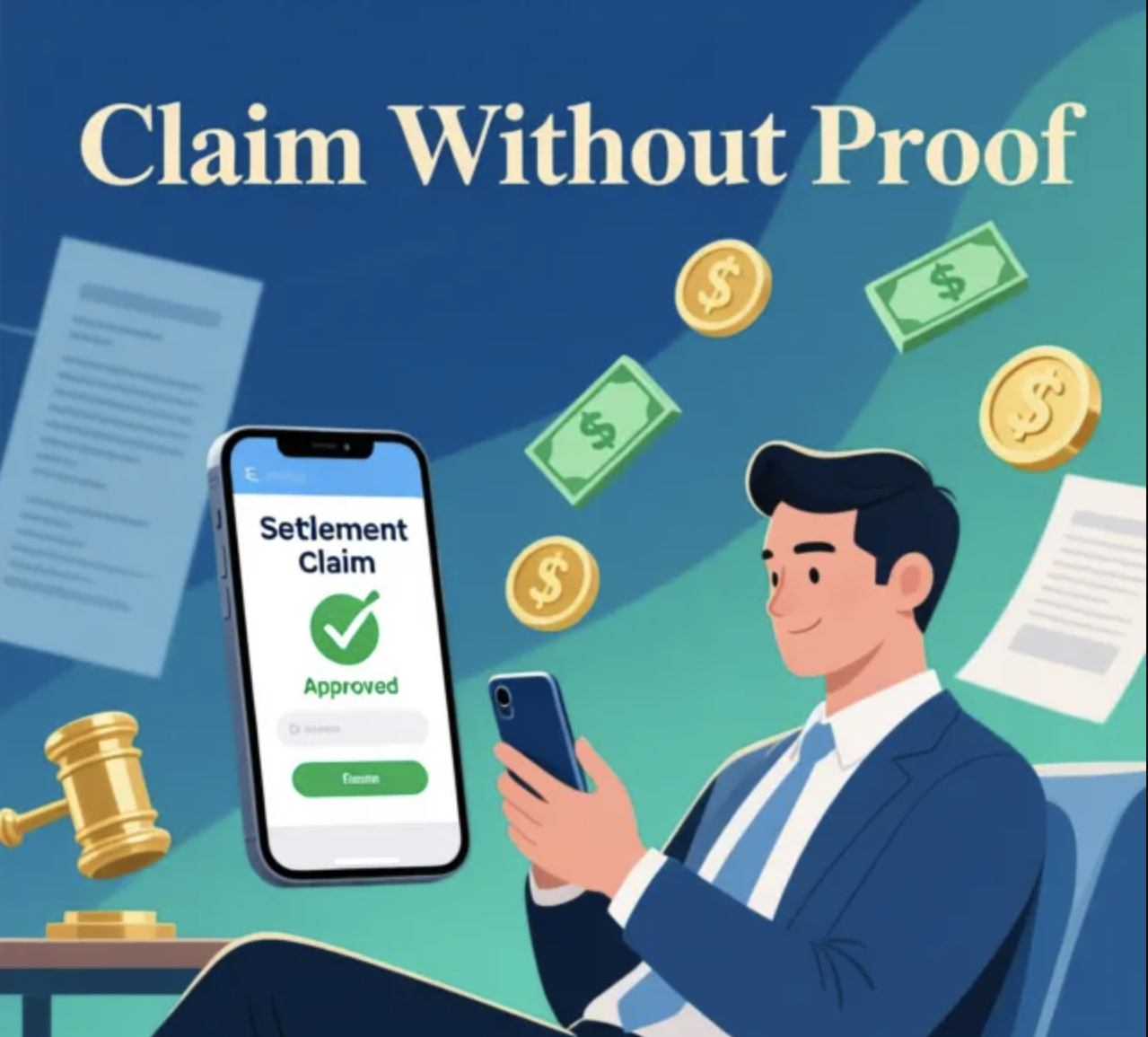
Yes! Many legitimate class action settlements accept self-certified claims using just an affidavit. This option is available when requiring proof would be unreasonable for consumers.
Key Principle: Settlement administrators understand that most people don't keep years-old receipts or documentation, so many claims accept simple sworn statements instead.
Types of Settlements That Accept No-Proof Claims
Consumer Product Pricing Settlements
Overcharging cases, false advertising claims, and defective product settlements often accept no-proof claims. These include electronics, food products, and retail goods where individual purchases are small.
Examples:
- • Smartphone pricing disputes
- • Food labeling cases
- • Consumer electronics
- • Beauty product claims
Payment Range:
- • $10-250 cash payments
- • Product vouchers
- • Gift cards
- • Company credits
Service Industry Fee Disputes
Banking, insurance, telecommunications, and utility companies often settle fee disputes through no-proof claims. These typically involve automated overcharges or unclear fee disclosures.
Common Cases:
- • Banking overdraft fees
- • Insurance premium overcharges
- • Telecommunications billing errors
- • Utility company disputes
Verification:
- • Account history checks
- • Customer database verification
- • Minimal proof required
Data Privacy Breach Settlements
Privacy violation settlements often accept claims with minimal documentation when personal data was exposed through no fault of the user. These include social media, data broker, and tech company breaches.
⚠️ Important: Privacy settlements typically require proof of residence or identity verification, but may not require proof of actual damages.
How No-Proof Settlement Claims Work
Eligibility Confirmation
First, verify you're eligible for the specific settlement. Most no-proof claims require that you:
- Purchased the specific product or service during the defined period
- Did not previously opt out of the settlement
- Can certify your eligibility under penalty of perjury
- Meet any demographic or geographic requirements
Complete Claim Form
Fill out the official settlement claim form with your personal information. Most forms include:
- Name, address, and contact information
- Basic eligibility questions about the product/service
- Self-certification statement or affidavit
- Electronic signature
Submit Affidavit
Many settlements require an affidavit—a sworn statement under penalty of perjury that your claim information is accurate. This legal document serves as your "proof" in place of receipts or documentation.
Important: False statements in affidavits can result in legal consequences. Only claim if you're genuinely eligible.
Verification Process
Settlement administrators may verify claims through:
- Customer database cross-referencing
- Random claim audits
- IP address verification
- Third-party background checks
Receive Compensation
Once your claim is verified, you'll receive your compensation through:
- Direct deposit or physical check
- Digital payment methods
- Product vouchers or credits
- Gift cards (for retail settlements)
Current Open No-Proof Settlement Opportunities
Consumer Electronics Pricing Settlement
Smartphone and laptop overcharging case accepting affidavit claims
Deadline: March 15, 2026
per claimant
Food Labeling Settlement
Food manufacturer false advertising case with no-document option
Deadline: April 30, 2026
product vouchers
Bank Overdraft Fee Settlement
Major bank overdraft fee class action with simple verification process
Deadline: February 28, 2026
direct deposit
Mobile Plan Overcharges
Wireless carrier billing dispute settlement with no-receipt options
Deadline: March 10, 2026
bill credits
⚠️ Important: Settlement deadlines are strictly enforced. Visit official settlement websites and file your claim before the deadline to avoid missing compensation.
Pros and Cons of No-Proof Claims
✅ Advantages
- Accessible to EveryoneNo need to find old receipts or documentation
- Simple ProcessUsually just complete an online form
- Faster PayoutsLess documentation review required
- Lower Barrier to EntryMore people can participate in settlements
⚠️ Considerations
- Lower CompensationTypically smaller than documented claims
- Risk of Fraud ClaimsSettlements may attract fraudulent applications
- Limited Claims per HouseholdUsually one claim per eligible household
- Potential Legal RisksFalse affidavits can have legal consequences
Common Mistakes to Avoid
Don't Make These Mistakes
- Filing Multiple Claims for Same SettlementMost settlements limit claims to one per household
- Misrepresenting Eligibility in your affidavit can result in claim denial and potential legal consequences
- Using Third-Party Claim Services that charge fees – legitimate settlements are always free to file
- Missing Deadlines – settlement claim deadlines cannot be extended for any reason
- Ignoring Official Communications – important settlement notices often end up in spam folders
Smart Practices to Follow
Verify Settlement Authenticity through official court websites or government agencies
- Save Confirmation Emails and all communications with settlement administrators
- Double-Check Deadlines and set calendar reminders
- Read All Requirements Carefully – understand what you're certifying before signing
- Use Official Websites Only – bookmark legitimate settlement sites to avoid scams
How to Find Legitimate No-Proof Settlements
Government & Agency Websites
- • FTC.gov – Consumer protection settlements
- • State Attorney General websites
- • CFPB (Consumer Financial Protection Bureau)
- • SEC.gov – Securities and investment settlements
Legal and Settlement News Sources
- • ClassAction.org – Comprehensive settlement database
- • Top Class Actions – Current settlement listings
- • Law firm websites – Settlement announcements
- • Legal news publications – Settlement case coverage
Verification Steps
Always verify settlement legitimacy before filing claims:
- Check court docket information
- Verify settlement administrator contact details
- Look for official court approval documentation
- Cross-reference multiple reliable sources
Pro Tip: Create a spreadsheet to track settlements, deadlines, and your claim status. Many settlements have different deadlines, and staying organized helps maximize your compensation.
Frequently Asked Questions
Are no-proof claims legitimate?
Yes, many legitimate settlements accept no-proof claims when requiring documentation would be unreasonable. Courts and regulatory agencies understand that consumers rarely keep old receipts, so they allow sworn statements instead.
How do settlement administrators verify no-proof claims?
They use various verification methods including customer database cross-referencing, IP address checks, random claim audits, and sometimes third-party verification services. Legitimate settlements have robust fraud prevention measures in place.
What happens if I make a mistake on my affidavit?
Most settlement administrators will contact you to correct errors before finalizing your claim. However, knowingly providing false information can result in claim denial and potential legal consequences.
Can I claim from multiple settlements?
Yes, as long as you're eligible for each settlement and they are different cases. However, some settlements may have exclusivity provisions that prevent you from claiming from both related cases.
How long does it take to receive payment?
No-proof claims typically process faster than documented claims, usually within 3-9 months. However, timeline varies by settlement and the number of claims received.
Don't Miss Your No-Proof Settlement Claims
Millions of dollars in settlement compensation goes unclaimed every year simply because people assume they need documentation. Let Reclaimr help you discover no-proof settlements you're eligible for.
Reclaimr monitors active settlements and alerts you when no-proof opportunities are available.
Start Finding Claims