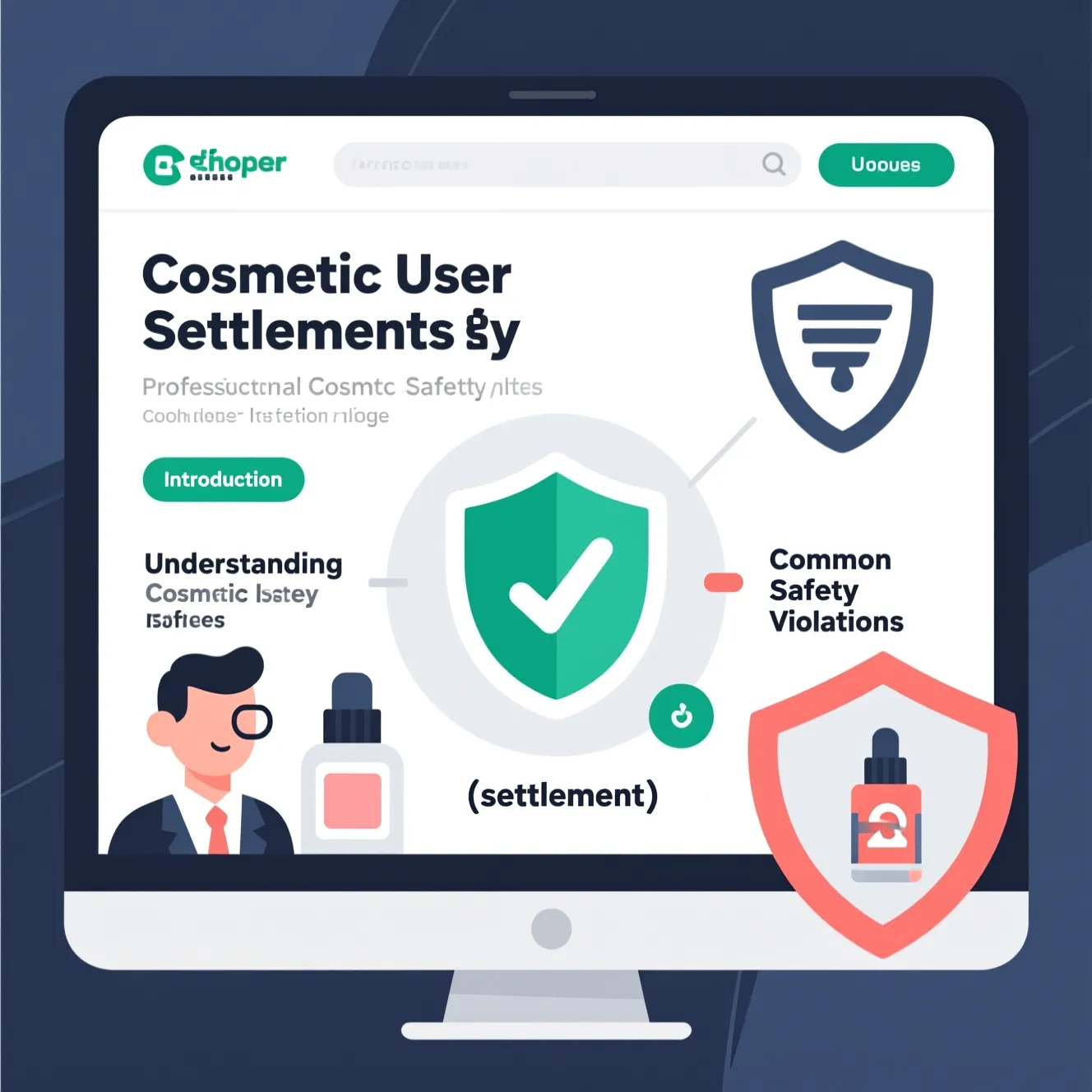
Cosmetic Safety: Understanding Cosmetic User Settlements
Over $5 Billion in Cosmetic Settlements Paid Since 2015
When beauty products turn harmful, consumers have rights. Learn how to identify cosmetic safety issues, join class actions, and claim your share of billions in settlement compensation.
📋 Table of Contents
🔍 Introduction
The beauty industry generates over $500 billion annually worldwide, with consumers spending billions on products that promise everything from anti-aging benefits to flawless skin. However, behind the glossy advertisements and celebrity endorsements lies a complex regulatory landscape with significant gaps in safety oversight.
Unlike pharmaceuticals which must undergo rigorous FDA approval before reaching consumers, cosmetic products face minimal pre-market testing requirements. This regulatory gap has led to numerous safety issues, resulting in product recalls and multi-billion dollar settlements when companies fail to protect consumers.
In recent years, cosmetic manufacturers have paid billions in settlements related to safety violations, undisclosed ingredients, false advertising, and harmful side effects. This comprehensive guide will help you understand your rights as a cosmetic consumer, identify potentially dangerous products, navigate settlement processes, and claim compensation when you've been harmed.
🔬 Understanding Cosmetic Safety Issues
The Regulatory Landscape
The FDA's authority over cosmetics is primarily limited to voluntary recalls and monitoring safety reports, unlike their comprehensive authority over drugs and medical devices.
Key Regulatory Facts
- No FDA pre-market approval required for most cosmetics
- Manufacturers are responsible for product safety
- The Federal Food, Drug, and Cosmetic Act defines cosmetics
- Only color additives require FDA pre-market approval
- The Cosmetic Ingredient Review (CIR) assesses ingredient safety
Common Safety Concerns
Consumers may experience a range of adverse reactions to cosmetic products, from mild irritation to severe health consequences.
Types of Adverse Reactions
- Skin irritation and allergic reactions
- Chemical burns and scarring
- Eye injuries from improper application
- Systemic effects from absorbed ingredients
- Long-term health impacts from carcinogens
⚠️ Common Cosmetic Safety Violations
Dangerous Ingredients
Many cosmetic products contain ingredients with known safety concerns that manufacturers continue to use despite risks.
Ingredients of Concern
| Ingredient | Associated Risks |
|---|---|
| Parabens | Hormone disruption, potential carcinogen |
| Phthalates | Reproductive toxicity, endocrine disruption |
| Triclosan | Antibiotic resistance, hormone disruption |
| Heavy metals | Neurotoxicity, organ damage |
False Advertising Claims
Many cosmetic companies make unsubstantiated claims about product effectiveness that mislead consumers.
Common Misleading Claims
- "Hypoallergenic" (no legal definition)
- "Dermatologist tested" (no standard testing)
- "Age-defying" (improves aging)
- "Clinically proven" (without clinical data)
- "Natural" (may contain synthetic ingredients)
Manufacturing Violations
Poor manufacturing practices can lead to contamination and inconsistent product quality.
Manufacturing Issues
- Inadequate quality control procedures
- Microbial contamination
- Inaccurate ingredient labeling
- Poor packaging integrity
- Lack of stability testing
⚖️ The Cosmetic Settlement Process
How Settlements Originate
Cosmetic settlements typically begin when multiple consumers experience harm from a product, leading to legal action against the manufacturer.
Legal Triggers for Settlements
- Class-action lawsuits filed by affected consumers
- State attorneys general investigations
- FTC enforcement actions for deceptive practices
- Consumer Protection Act violations
- Product liability claims for injuries
The Settlement Lifecycle
Understanding the typical stages of a settlement helps consumers know what to expect and how to participate.
Settlement Stages
- Investigation Phase: Legal teams gather evidence and identify affected consumers
- Litigation Phase: Lawsuits are filed and evidence is presented
- Settlement Negotiation: Parties agree on terms and compensation amounts
- Court Approval: A judge must approve the settlement terms
- Claims Period: Eligible consumers submit claims for compensation
- Final Approval: Court finalizes the settlement after review of claims
- Distribution: Compensation is distributed to eligible claimants
💰 Major Cosmetic Settlements (2020-2026)
Notable Settlement Cases
These landmark settlements demonstrate the scale of compensation available to affected consumers.
Recent Major Settlements
| Company | Product | Settlement Amount | Issue |
|---|---|---|---|
| L'Oréal | Hair Relaxers | $411.5M | Cancer and injury claims |
| Procter & Gamble | Sunscreens | $12.5M | False SPF claims |
| Estée Lauder | Skincare Products | $90M | Unproven anti-aging claims |
| Unilever | Dove Products | $135M | Microplastic contamination |
| Johnson & Johnson | Baby Powder | $8.9B+ | Asbestos contamination |
Industry Impact
These settlements have forced significant changes in cosmetic industry practices and consumer awareness.
Industry Changes Resulting from Settlements
- Increased ingredient transparency
- Stricter quality control procedures
- More rigorous clinical testing for claims
- Improved product safety protocols
- Enhanced consumer education programs
- Greater regulatory compliance efforts
🎯 Identifying Your Eligibility
Eligibility Criteria
Not everyone who used a product qualifies for settlement compensation. Specific criteria determine eligibility.
Common Eligibility Factors
- Purchased the product during specified timeframe
- Experienced specific health issues or injuries
- Retain proof of purchase or usage
- Reside in eligible geographic regions
- Followed product usage instructions
- Did not significantly alter product use
Documentation Requirements
Proper documentation is crucial for claim approval and maximizing your compensation amount.
Essential Documentation
Purchase Records
- Receipts
- Credit card statements
- Product packaging
- Online order confirmations
Medical Documentation
- Medical records
- Doctor's diagnoses
- Treatment records
- Photographs of injuries
📝 How to File a Claim
Step-by-Step Claim Process
Filing a cosmetic settlement claim requires careful attention to detail and adherence to deadlines.
Claim Submission Steps
- Research Active Settlements: Monitor settlement websites and news for relevant cases
- Verify Eligibility: Review settlement terms to confirm you qualify
- Gather Documentation: Collect all required purchase and medical records
- Complete Claim Form: Fill out all sections accurately and completely
- Submit Before Deadline: File claims well before the cutoff date
- Keep Copies: Retain copies of all submitted materials
- Follow Up: Check claim status periodically after submission
Claim Types and Compensation
Different types of claims may be available depending on the nature of the harm experienced.
Claim Categories
Medical Injury Claims
- Documented health issues
- Medical expenses
- Lost wages
- Pain and suffering
Economic Claims
- Product cost refunds
- Replacement costs
- Time value of money
- Usage compensation
💡 Strategies for Successful Claims
Maximizing Your Claim Value
Strategic preparation can significantly increase your compensation amount and claim approval chances.
Claim Enhancement Strategies
- Maintain detailed usage records and journals
- Document all medical visits and treatments
- Keep track of all related expenses
- Take photographs of injuries or damage
- Obtain expert medical opinions when possible
- Organize all documentation chronologically
Avoiding Common Pitfalls
Many claimants lose potential compensation by making avoidable mistakes during the claims process.
Claim Mistakes to Avoid
- Missing filing deadlines
- Incomplete or inaccurate forms
- Insufficient documentation
- Failing to read settlement terms carefully
- Not following submission instructions
- Waiting until the last minute to file
📊 Case Studies: Real Consumer Success Stories
Success Story 1: Sarah's Hair Relaxer Settlement
Sarah experienced severe scalp burns and hair loss after using a popular hair relaxer product. Through careful documentation and timely claim submission, she received $45,000 in compensation.
Key Success Factors
- Photographic documentation of injuries
- Medical records from multiple specialists
- Detailed usage timeline maintained
- Professional medical opinion linking product to injuries
- Submitted claim 3 months before deadline
Success Story 2: Michael's Sunscreen False Claims
Michael purchased a sunscreen that claimed SPF 50 protection but only provided SPF 15 protection. He experienced sunburn and skin damage despite proper application. His successful claim resulted in $2,500 compensation.
Key Success Factors
- Retained original product packaging
- Photos of sunburn and damage
- Independent testing results showing actual SPF
- Detailed application instructions followed
- Multiple purchase receipts showing regular use
❓ Frequently Asked Questions
How long does a typical settlement process take?
Settlement processes typically take 1-3 years from the initial lawsuit to final compensation distribution. Complex cases involving multiple plaintiffs or significant health impacts may take longer.
Do I need a lawyer to file a claim?
Most cosmetic settlements don't require individual lawyers, as they're handled through class-action attorneys. However, consulting with a personal injury attorney is recommended if you've experienced significant health issues from cosmetic product use.
What if I can't find my purchase receipts?
Many settlements accept alternative documentation such as credit card statements, bank records, product packaging, or witness testimony. Contact the settlement administrator to discuss what documentation alternatives may be accepted.
How much compensation can I expect?
Compensation varies widely based on the settlement terms, the nature of your injuries, and the extent of product usage. Some settlements offer fixed amounts per claimant, while others provide compensation based on documented expenses and damages.
What happens if my claim is denied?
If your claim is denied, you typically have the right to appeal the decision with additional documentation. Settlement administrators will provide specific instructions for the appeals process, which usually requires submitting missing information or clarifying details.
✅ Conclusion
Cosmetic user settlements represent a powerful mechanism for holding manufacturers accountable when their products cause harm. With billions paid in recent settlements and many more active cases ongoing, consumers have significant opportunities to seek compensation when they've been harmed by unsafe cosmetic products.
The key to successful settlement participation lies in understanding your rights, carefully documenting your experience, and following the claims process meticulously. By staying informed about active settlements, maintaining thorough records, and acting promptly, you can maximize your chances of receiving fair compensation.
As the beauty industry continues to evolve, consumers must remain vigilant about product safety and their rights. Settlements not only provide compensation to affected individuals but also drive industry-wide changes that ultimately benefit all consumers by promoting greater transparency and safety standards.
Don't Miss Your Compensation
Billions in settlement compensation goes unclaimed every year. Let Reclaimr help you discover and claim your share.
Reclaimr monitors active settlements and alerts you when you're eligible for compensation.
Start Finding Claims